Court Marriage & Nikah Blog
Legal and practical information about court marriage, Nikah, marriage registration, overseas cases and related documentation.
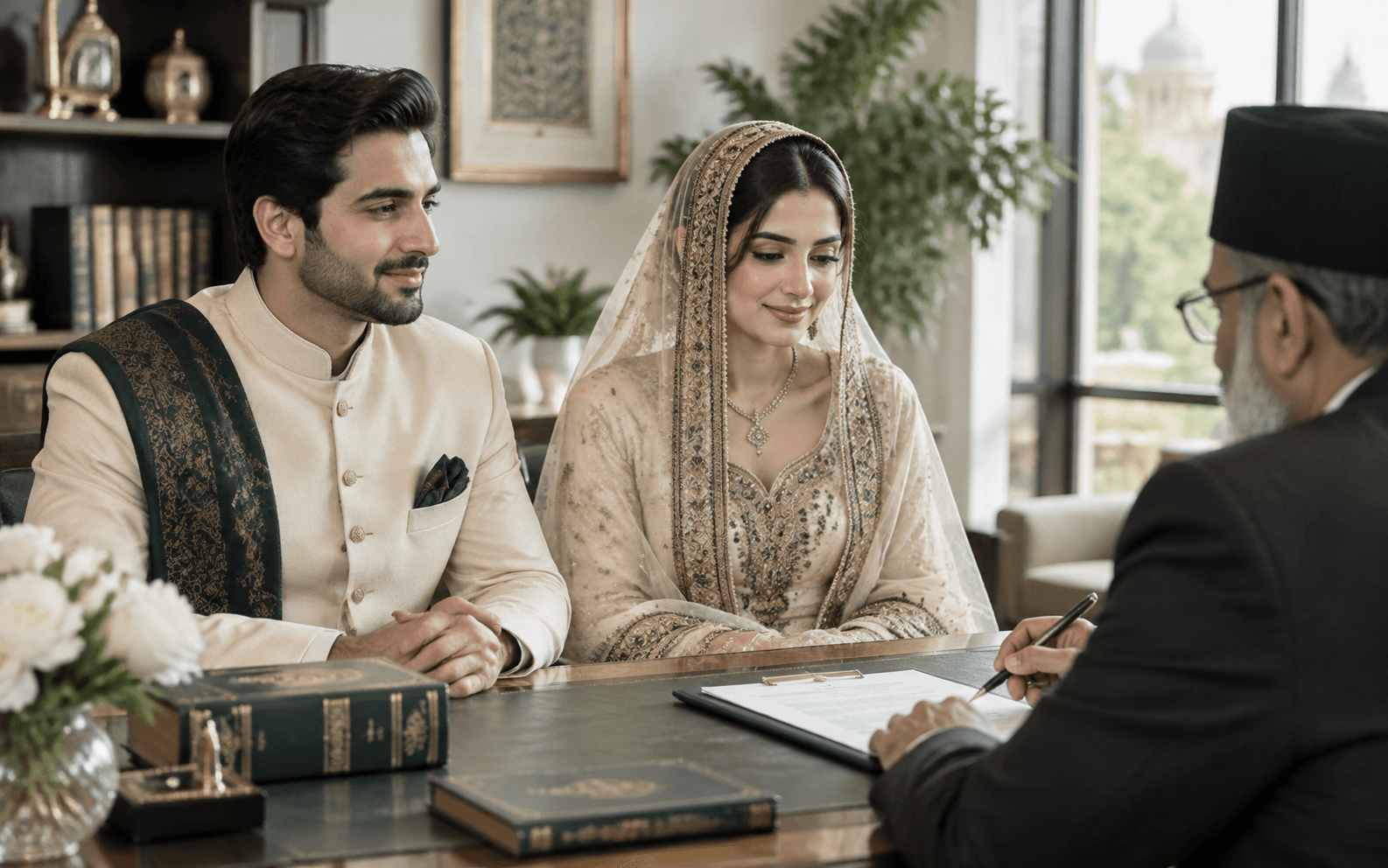
Court Marriage & Nikah Blog: What You Should Know Before Proceeding.
This page is intentionally detailed so a client can understand the major legal, documentation and registration issues before booking a service. Individual facts can change the answer, so general information should not be treated as a substitute for review of a specific file.
Court Marriage and Nikah Blog: Purpose and Scope
Court Marriage and Nikah Blog exists to provide practical educational material about court marriage, Nikah, marriage registration, online Nikah, foreign-national cases and related family-law documentation. The page is written for people researching a marriage process before taking legal advice, as well as clients who need a plain-language explanation of documents and procedure. Court marriage work sits at the intersection of personal choice, family law, religious solemnisation, identity documents and local registration. That means useful information must do more than repeat a phone number. It should explain what the service can do, where official authority begins, which facts change the answer and when a reader should obtain case-specific legal advice before acting.
The editorial and service approach emphasises clear separation between general information and case-specific legal advice, with articles written around real search questions rather than thin keyword pages. CourtMarriage.live does not treat the phrase court marriage as proof that every couple must marry before a judge. For an ordinary Muslim marriage, the usual work centres on lawful Nikah, the prescribed Nikah Nama, the role of the licensed Nikah Registrar and registration through the competent local authority. Courts may be relevant for protection, family disputes or another separate remedy, but the website should not confuse those proceedings with the ordinary solemnisation of the Nikah.
Court Marriage and Nikah Blog and Legal Accuracy
Legal accuracy is particularly important in marriage-service content because age rules, local registration practice and official documentation can change. Pakistan does not operate one identical administrative office for every city and province. Sindh, Punjab and Islamabad also have their own current child-marriage legislation. A useful page should therefore identify the jurisdiction before stating a minimum age, document checklist or registration procedure. Old blog posts copied from another city can create real risk if they describe a rule that has been amended.
The website also distinguishes statutory requirements from common market language. Terms such as court marriage, online Nikah and NADRA marriage certificate are widely searched, but they can oversimplify the legal reality. Good content uses the familiar term so a reader can find the page, then explains what the term actually refers to. That approach is better for clients and for long-term search quality than repeating an inaccurate phrase simply because competitors use it.
Court Marriage and Nikah Blog: How A Court Marriage Enquiry Is Assessed
A useful first enquiry normally covers the names and ages of the parties, city or country of residence, nationality, present marital status, availability of identity documents and whether both parties can attend. The adviser should also ask whether either person has been married before, whether a party is abroad, whether family opposition creates a safety issue and what the couple needs after the Nikah. These facts determine whether the matter is a straightforward local Nikah or requires additional legal and documentary work.
The purpose of intake is not to interrogate a client. It is to avoid giving a confident answer to the wrong facts. A person asking about a same-city adult Nikah needs different guidance from a foreign national relying on an overseas divorce and a power of attorney. When the important facts are identified at the beginning, the service can give a more accurate document list, fee scope and expected sequence. That saves time and reduces the temptation to create paperwork first and solve legal problems later.
Court Marriage and Nikah Blog and Free Consent
Free consent should remain visible throughout the service. Court marriage enquiries often arise where families disagree with the couple, but family disagreement and legal incapacity are not the same thing. An adult should be able to express the decision independently and understand the Nikah terms. If a person appears coerced, confused, underage or unable to communicate freely, the service should not simply proceed because another person has brought the documents or paid the fee.
A careful consent process also improves the quality of the Nikah Nama. Mahr, identity details and any lawful special conditions should be discussed with the parties instead of being filled in later by an intermediary. Where language is a barrier, material terms should be explained. Where one party is remote, the authority and consent arrangement should be documented clearly. Respecting consent is therefore not only an ethical principle; it has practical value for the validity, evidentiary strength and future use of the marriage record.
Court Marriage and Nikah Blog: Marriage Registration Explained
Section 5 of the Muslim Family Laws Ordinance, 1961 provides for registration of Muslim marriages and licensed Nikah Registrars. That framework should be reflected consistently across CourtMarriage.live. A person who solemnises a Nikah and a person licensed to register marriages may be the same individual, but the roles should not be assumed to be identical in every case. If the Nikah is solemnised by another person, the marriage should still reach the appropriate registrar and local authority for lawful registration.
Readers should also understand the document chain. The signed Nikah Nama, registered Nikah record, computerised Marriage Registration Certificate and later NADRA identity or family-record updates are connected but distinct. A website that describes all of them as one automatic NADRA certificate creates confusion. CourtMarriage.live should identify the particular document the client needs and explain which authority controls that stage. This helps a couple plan for immigration, inheritance, banking, passport or family-record use after the ceremony.
Court Marriage and Nikah Blog for Overseas and Foreign-national Readers
Overseas and foreign-national readers need cautious information because their marriage documents may cross legal systems. A Pakistani Nikah and registration process may be valid locally while a foreign civil-status, immigration or court authority asks for translation, attestation, legalisation or additional proof. The website should never promise that one Pakistani document is automatically accepted everywhere. Instead, it should explain the local process and encourage the client to check the intended destination use.
Foreign passports, visas, single-status evidence, divorce records, powers of attorney and translations may be relevant depending on the case. No universal embassy NOC applies to every foreign national. The correct approach is to identify nationality, religion, residence, marital status and the authority that will later receive the marriage document. This level of qualification makes the content more useful than a simple list of foreign-national requirements copied across every country page.
Court Marriage and Nikah Blog: Online Nikah and Proxy Arrangements
Online Nikah is another area where familiar marketing language can conceal important distinctions. Technology can connect the parties, witnesses, Nikah Khawan and advisers, but a video meeting does not itself waive the requirements of Nikah or statutory registration. Where an authorised representative acts for a party, the authority should be valid and sufficiently clear. Identity and free consent should be established, and the later registration path should be planned before the ceremony.
The same caution applies to scanned signatures and digital documents. A scan may be useful for preliminary review, but an authority may still require an original, notarised, attested or certified document. The website should explain what can be done remotely and what may still require an original record or official process. This prevents clients from assuming that online means no documentation or no government involvement.
Court Marriage and Nikah Blog: Privacy and Document Handling
Marriage enquiries contain highly sensitive personal information. CNICs, passports, addresses, signatures, divorce documents and family details should be handled as confidential client material. A prospective client should not be encouraged to post these documents publicly or send them to multiple unknown contacts merely to obtain a price estimate. The service should request only the information reasonably necessary at each stage and explain why a particular record is needed.
Privacy is especially important in free-will marriages where family opposition may exist. A casual disclosure of an address or identity document can create a security problem. CourtMarriage.live should therefore use controlled contact routes, city-specific phone numbers and clear internal handling. Where a protection concern exists, the client should receive case-specific legal advice rather than a marketing assurance that the marriage papers themselves will prevent every form of harassment or complaint.
Court Marriage and Nikah Blog: Fees, Quotations and Expectations
A professional quotation should identify the work included. Court marriage enquiries can involve consultation, affidavit or document drafting, Nikah Khawan arrangements, Nikah Nama completion, registrar coordination, local registration, certificate assistance, translation, attestation, courier or separate court proceedings. These are not always one bundled service. Government and third-party fees should be distinguished where possible so the client can compare quotations on a like-for-like basis.
Expectations about timing should also be specific. A private provider may be able to arrange a consultation or ceremony quickly, but it cannot guarantee the internal processing speed of a government office, foreign embassy or another authority. A reliable page should say what is under the service provider's control and what is not. This is more credible than using same-day language for every stage of every case.
Court Marriage and Nikah Blog: City-specific Service Routing
CourtMarriage.live uses city-specific routing because local facts matter. Karachi, Lahore, Islamabad and Rawalpindi should not all display the same local number or be treated as one administrative jurisdiction. The city pages can share national legal principles while still addressing the correct provincial or territorial age law, local registration context and contact team. Faisalabad and Multan also need their own Punjab-focused pages rather than paragraphs added merely to capture city keywords.
City routing is also useful for client service. A caller should be able to reach the team dealing with the relevant city instead of explaining the same facts repeatedly after being transferred. Where a couple lives in one city and proposes to marry in another, the website should invite them to disclose both locations so the adviser can identify the appropriate registration route. The purpose of local pages is therefore practical as well as SEO-related.
Court Marriage and Nikah Blog: Editorial Standards for Legal Content
Long legal pages should be useful rather than padded. CourtMarriage.live uses headings to answer a real question every few paragraphs, avoids invented guarantees and distinguishes general information from advice on a specific file. Important legal statements should be checked against current legislation and official material before publication. When an answer can vary by nationality, province, marital status or local authority, the page should say so clearly instead of forcing every visitor into one simplified rule.
The site should also avoid thin city pages that merely replace Karachi with Lahore in the same paragraph. Some legal principles will naturally repeat, but the page should develop the local issue that makes the search useful: Punjab's current age law, Islamabad's territorial distinction, Karachi's Sindh framework, twin-city jurisdiction or foreign-national document use. This improves both client understanding and topical relevance.
Court Marriage and Nikah Blog: When Separate Legal Representation May Be Needed
Not every marriage enquiry is only a documentation matter. Threats, confinement, violence, a false criminal allegation, a dispute about existing marital status, an injunction, guardianship issue or another contested family-law problem may require separate legal representation. The marriage service should identify that distinction early and avoid suggesting that an affidavit, photograph or registered Nikah Nama automatically resolves every dispute.
Where court proceedings are genuinely required, the client should receive advice based on the relevant cause of action and facts. This is different from manufacturing litigation merely to make an ordinary Nikah look more official. A mature service model recognises when a client needs a registrar, when a client needs a lawyer and when both roles are involved in separate stages.
Court Marriage and Nikah Blog: After-marriage Document Planning
The service should not end with the ceremony. Couples should know which original and registered records to keep, how to check spellings, what to do if a correction is needed and whether a computerised certificate is required. A person planning a visa, immigration petition, foreign spouse registration or passport change should identify those goals early because the destination authority may ask for a particular translation or authentication chain.
Good after-marriage planning also helps with ordinary life events. Marriage records can be relevant to inheritance, birth registration, insurance, banking, family registration and later family litigation. A clean official trail is therefore valuable even where the couple has no immediate immigration plan. CourtMarriage.live should encourage clients to preserve the record rather than rely on photographs of documents stored only in a messaging application.
Court Marriage and Nikah Blog: Practical Next Step
A prospective client should gather the core identity documents, current address information and evidence of present marital status before contacting the team. If a party is abroad, include the country and likely participation method. If either person was previously married, mention how that marriage ended. If a foreign authority will later use the document, say which country and purpose. These details allow the first consultation to produce a meaningful checklist instead of a generic response.
The next step should then be proportionate to the file. A simple matter may move directly to scheduling; a complex matter may need a document correction, legal opinion, translation, authority document or separate protection advice first. The aim is not to create delay but to prevent the more expensive delay that occurs when a marriage record is completed incorrectly. That service philosophy is the practical foundation of Court Marriage and Nikah Blog.
Court Marriage & Nikah Blog FAQs.
These answers explain common issues in general terms. Documents, nationality, previous marital status and the relevant authority can change the advice for an individual case.
Ask about your case →What is the purpose of Court Marriage and Nikah Blog?+
to provide practical educational material about court marriage, Nikah, marriage registration, online Nikah, foreign-national cases and related family-law documentation. It is intended for people researching a marriage process before taking legal advice, as well as clients who need a plain-language explanation of documents and procedure.
Does CourtMarriage.live claim that every court marriage happens before a judge?+
No. For an ordinary Muslim marriage, the usual process concerns lawful Nikah, proper documentation and registration. Court proceedings are separate and become relevant only where a legal dispute or remedy requires them.
Why are city pages different?+
Age legislation, local administrative context, registrar jurisdiction and contact routing can differ. The site therefore keeps Karachi, Punjab cities and Islamabad distinct instead of using one national checklist for every location.
Why does the site qualify foreign-national requirements?+
Because nationality, marital status, visa position and the intended foreign use of documents can change what is needed. A universal embassy NOC rule would be inaccurate.
What does marriage registration involve?+
A Muslim marriage should be recorded through the competent Nikah Registrar and local authority under the applicable legal framework. The signed Nikah Nama, registered record, computerised certificate and later NADRA updates are related but distinct.
Can legal advice be given from a short website enquiry?+
General guidance can identify likely issues, but a reliable case-specific opinion may require identity, age, marital-status and jurisdiction documents. Complex files should be reviewed before a promise is made.
How are client documents treated?+
Identity and family records should be handled confidentially and shared only with persons reasonably involved in the consultation, Nikah, registration or other authorised work.
Does a fast Nikah guarantee fast government processing?+
No. Private preparation may be quick in a straightforward file, but registration, certificate, attestation and foreign-authority processing have their own timelines.
Why does CourtMarriage.live use long-form content?+
Because marriage decisions often involve several linked questions. A page should explain the process, documents, risks and authority roles instead of forcing a client to rely on a thin sales paragraph.
What should a new client prepare before contacting the team?+
Identity documents, ages, current addresses, marital-status information and details of any previous marriage or overseas/foreign-national issue are the best starting point.
Need Case-Specific Guidance?
Contact the team before relying on a generic checklist, particularly for foreign-national, previous-marriage or overseas cases.